Why New Runners Shouldn’t Just Run More Pt. 1 | Evolve Human Performance
If you're a new runner trying to get fit as quickly as possible, the instinct is to run more. More kilometres, more days, more effort. It sounds logical, but it's one of the fastest ways to end up injured, frustrated, and back on the couch within a few months.
The secret to getting fit quickly isn't just running more. It's building aerobic volume, and if you try to do that exclusively through running, you're setting yourself up for failure.
This is directed at new runners primarily, but the concept holds across the board. The outliers are elite athletes who have spent years or decades building the capacity to run high mileage. That's probably not you right now, and that's completely fine.
What Is Aerobic Volume and Why Does It Matter?
Aerobic volume is simply the total amount of cardiovascular training you do per week, measured in time. To get fit, you need to increase this over time. The more aerobic work you can accumulate, the stronger your cardiovascular system becomes and the faster your fitness develops.
The problem for new runners is that your cardiovascular system will often adapt faster than your muscles, tendons and connective tissues can handle. Your lungs and heart might be ready for more, but your achilles, shins and knees are not. This is why most running injuries in beginners aren't freak accidents, they're predictable overuse injuries that happen when the aerobic system outpaces the structural capacity of the body.
So we have two competing systems that adapt at different rates, and most new runners only train one of them.
What Running Progression Actually Looks Like
Let's use a realistic example. As a new runner, a sensible starting point might look like three 3km runs per week at an easy, conversational pace. At around 6:30 to 7:00 per kilometre, each run takes about 20 minutes. That's 60 minutes of aerobic work for the week.
If you progress conservatively by 10% per week, which is already considered the upper end of safe progression, your weekly aerobic volume over the first month looks like this:
Week 1: 60 minutes
Week 2: 66 minutes
Week 3: 73 minutes
Week 4: 80 minutes
After a month of consistent training you are doing 80 minutes of aerobic work per week. That's solid progress and if you can do this without injury you're building a really good foundation.
The catch is that to get more aerobic volume through running alone, you have to run more. More kilometres means more mechanical stress on your tissues, and for a new runner that's where things start to go wrong.
The Smarter Way to Build Aerobic Volume
Now let's look at what happens when you add two 30 minute rides per week on top of the same running program. Cycling places virtually no mechanical stress on your tendons and connective tissues in the way running does. Your legs are working, your heart rate is up, and you're accumulating real aerobic stimulus, but you're not hammering the same tissues that your running is already loading.
Because of this, you can actually progress your cycling volume more aggressively, around 15% per week, without the same injury risk. Here's what that looks like over the same month:
Week 1: 60 minutes running + 60 minutes riding = 120 minutes total
Week 2: 66 minutes running + 69 minutes riding = 135 minutes total
Week 3: 73 minutes running + 79 minutes riding = 152 minutes total
Week 4: 80 minutes running + 91 minutes riding = 171 minutes total
Combined, you end up doing 171 minutes of aerobic work by week four, compared to 80 minutes through running alone. That's over double the aerobic volume, with the same amount of stress on your running-specific tissues. The aerobic adaptations from those extra 90 minutes are real and substantial. Your heart, lungs and cardiovascular system don't care whether the stimulus came from running or riding.
You could also add higher heart rate sessions through the bike with minimal additional tissue stress, which is something you absolutely cannot do through running without significantly increasing injury risk at this stage.
Why This Matters for New Runners Specifically
The biggest thing that is going to limit your ability to improve as a runner isn't your cardiovascular fitness. In the early stages of running, it's your muscles, tendons and tissues. They adapt slowly, and that's not a flaw, that's just biology. Give them the time they need.
Trying to rush this process by simply running more is one of the most common mistakes we see with new runners. The body breaks down, training gets disrupted, and the fitness gains you were chasing disappear while you're sitting on the sidelines nursing a shin splint or a sore achilles.
The athletes who progress fastest aren't always the ones who run the most kilometres. They're the ones who accumulate the most total aerobic volume while keeping their running load at a level their tissues can actually absorb and recover from.
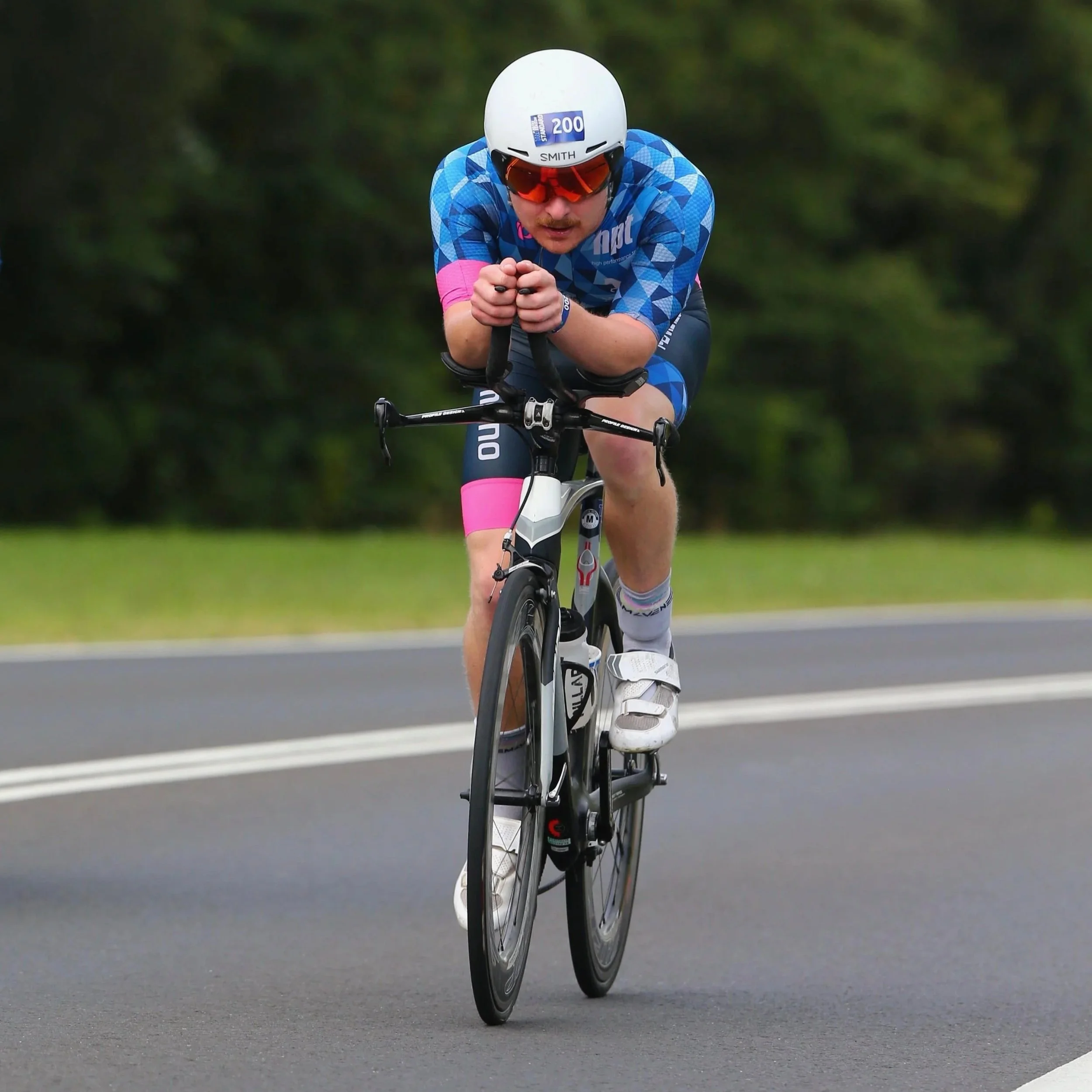
Our coach Riley, competing in Triathlon
This Isn't Just About Cycling
Cycling is the most obvious example because of how accessible it is, but the same logic applies to swimming, rowing, the elliptical, or any other low-impact cardiovascular modality. The point isn't that you should become a cyclist. The point is that diversifying your aerobic training lets you accumulate fitness at a rate your body can actually handle.
For runners who are also working towards triathlons, this concept is even more directly applicable. The swim and ride aren't just race disciplines, they're training tools that allow you to build an enormous aerobic base without constantly battering the same tissues.
What About the Mechanical Side of Running?
It's worth being clear that running is not purely an aerobic exercise. The mechanical stress being placed on your muscles, tendons and tissues through running is also a positive stimulus. It adapts them to the specific demands of running, which is something cycling cannot fully replicate. You do need to run to become a better runner.
The goal isn't to replace running with other modalities. The goal is to keep your running load at a level that your tissues can recover from, while using other forms of training to push your aerobic capacity well beyond what your running load alone could achieve.
In part 2, we cover how to address the mechanical and structural side of this equation through strength training, so your muscles, tendons and tissues can keep up with the aerobic fitness you're building.
Putting It Into Practice
If you're a new runner trying to get fit as quickly as possible without breaking down, here's a practical starting framework:
Keep your running progression conservative. A 10% increase in weekly running volume is already at the upper end of what's recommended. Don't let enthusiasm push you past this.
Add low-impact aerobic work. Two 30 minute rides per week on top of your current running program is a simple and effective starting point.
Listen to your tissues, not just your lungs. If your cardiovascular system feels ready for more but your shins or achilles are giving you feedback, respect that signal. It's your tissues telling you they're not keeping up.
Think in total aerobic minutes, not just kilometres. The number on your watch at the end of a run is not the only measure of a productive training week.
Don’t get fixated on the long run at the expense of weekly volume. The long run is important, but don’t let it compromise every other session that week. Read more on whether your long run is doing more damage than good.
Want a program that gets the balance right?
This is exactly the kind of thing we work through with new and developing runners on our online run coaching program. Building aerobic volume intelligently, keeping tissue stress manageable, and making sure you stay fit enough to train consistently. If you're based anywhere in Australia and want a program built around where you're actually at, get in touch here.