A strength and conditioning coach assesses how you move, builds a training program around your sport, race or goal, coaches you through the sessions and tests your progress over time. The aim is to make you stronger, more powerful, fitter and more resilient to injury, and you do not need to be a professional athlete to benefit.
Strength and conditioning has an image problem. Most people picture a footy club weights room or an Olympic training centre, and nearly every athletic development program around the Sutherland Shire is built for kids and teenagers. That leaves a lot of adults who play weekend sport, train for races or simply want to move and perform better wondering whether S&C is meant for them at all.
At Evolve Human Performance in Caringbah, most of the people we coach are adults with jobs, families and limited time. Some are marathon runners and triathletes, some play touch football or rugby league on the weekend, and some are in their fifties and want to stay strong for the next thirty years. What they share is that they want their training to lead somewhere, and that is the core of what a strength and conditioning coach provides.
This post covers what an S&C coach does, who it suits, what happens in your first session and how a program is built, coached and measured at our gym in the Sutherland Shire.
What a Strength and Conditioning Coach Does
A strength and conditioning coach does four jobs. They assess where you are starting from, build a program around what you are training for, coach you through the work and measure whether it is moving you forward. The title gets attached to elite sport, but those four jobs are the same whether the client is a professional footballer or a 45 year old training for a first half marathon.
Assess. Before anything is written, a good S&C coach wants to know how you move, what your training history looks like, what has gone wrong in the past and what you are working towards. Without that information, the program is a guess.
Program. The program is built backwards from your goal, whether that is a race date, the start of a footy season or simply being stronger in twelve months than you are today. It sets out what you do, how heavy, how often and how that changes from week to week, so progress is planned rather than hoped for.
Coach. A program on paper is only as good as its execution. Coaching is where technique gets refined, loads get adjusted on the day based on how you are recovering, and sessions get modified when work, sleep or a niggle gets in the way.
Measure. Testing at the start and end of each training block shows whether the work is landing. If the numbers are not moving, the program changes. If they are, you have evidence that the time you are putting in is paying off.
In Australia, strength and conditioning coaches are accredited through the Australian Strength and Conditioning Association (ASCA), which runs a tiered accreditation pathway starting at Level 1. I hold ASCA Level 1 accreditation and have been coaching runners, triathletes and everyday athletes at Evolve since 2017.
People often ask how this differs from personal training, and the overlap is bigger than most expect. The main difference is the starting point. Strength and conditioning begins with a performance goal and works backwards from it, while general fitness training tends to begin with the session in front of you. Plenty of personal trainers coach with a long-term plan in mind, and our own one-on-one sessions are built on the same principles as the rest of our strength and conditioning coaching. The title matters less than whether your training is heading somewhere.
Who Strength and Conditioning Is For
If you train with a goal in mind, strength and conditioning is built for you. You do not need to compete, hold a ranking or have played at a high level. Most athletic development programs in the Shire are designed for juniors, which is great for them, but it leaves adults with very few options for the same kind of structured training. That is the gap we fill at Evolve.
Runners and triathletes make up a big part of the athletes we coach, from 5k racers through to Ironman. Strength work gives them the tissue capacity to handle more running and the power to hold form late in a race, which is why it sits inside our preparation for events like the Sydney Half Marathon and the Sydney Marathon. If you are a runner unsure where to start, the top 5 strength exercises for runners and triathletes is a good first read.
Weekend sport players are the other big group. Rugby league, AFL, touch football and soccer all demand speed, change of direction and the ability to absorb contact or repeat sprints, yet most adults playing them do little preparation beyond turning up to training. A structured S&C program builds the qualities those sports reward and makes the body more robust against the injuries that tend to end seasons early.
We also coach masters athletes who want to stay strong and capable well into their fifties and sixties, HYROX and hybrid athletes balancing strength with serious conditioning, people returning to sport after injury, and adults who want their training to have a purpose beyond burning calories. The common thread is a goal, and what that goal looks like varies a lot from one person to the next.
Not sure whether strength and conditioning fits your goals? Book a chat with me and we can work out the best place to start.
What Happens in Your First Session
Your first session at Evolve is an assessment rather than a workout. The aim is to collect enough information to build a program that fits you, instead of slotting you into something generic.
We start with a conversation about what you are training for, whether that is a race, a sport season or a general goal, along with how many days you can realistically train and what the rest of your week looks like. A program that ignores your work hours or your family commitments will not survive the first month, so this part matters more than people expect.
Next comes your injury and training history. Old injuries, recurring niggles and past training habits all shape what you can tolerate now. A runner who has had three calf strains in two years needs a different starting point to someone who has been lifting consistently for a decade.
Then we look at how you move. A movement screen covers the patterns you will be loading, such as squatting, hinging, lunging, pushing and pulling, along with single-leg control and mobility through the hips and ankles. This is not about finding faults for the sake of it. It tells us what you can load safely today and what needs building first.
Finally, we run baseline tests matched to your goals. Depending on what you are training for, these can include strength, jumping and conditioning measures. Those numbers become the reference point for everything that follows, and your program is built from the results rather than from a template.
What Athletic Development Means for Adults
Athletic development sounds like something reserved for junior sport pathways, but the qualities it builds are the same ones adults lose when they stop training them. For an adult athlete, it comes down to five qualities.
Strength. The foundation for everything else. Stronger muscles and tendons tolerate more load, which means more training, fewer niggles and more left in the tank late in a race or game.
Power. The ability to produce force quickly. Power drives sprinting, jumping and change of direction, and it is the quality that fades fastest with age when it is left untrained.
Speed. Moving fast is a skill as much as a physical quality. Without regular exposure to it, adults gradually lose the ability to accelerate and react, which shows up on the footy field and in the final kilometre of a race.
Conditioning. The engine. Whether that means an aerobic base for endurance athletes or repeat sprint ability for team sport players, conditioning is built around the specific demands of your sport.
Resilience. The chassis. Robust tendons, joints and connective tissue that can absorb what training and competition throw at them. This is where most injury prevention lives.
Power deserves a closer look for anyone over 40. The fast-twitch muscle fibres responsible for explosive movement are the first to shrink when they are not used, which is why plenty of adults can still jog for an hour but struggle to sprint for a bus or jump onto a box. Those fibres still respond to training at any age, so including jumps, throws and fast lifts in a program is one of the most effective ways to hold onto the athleticism most people assume they are destined to lose.
How a Strength and Conditioning Program Is Structured
A strength and conditioning program is organised into blocks, usually somewhere between four and twelve weeks long, each with a specific job. This is called periodisation. You cannot build every quality at full intensity all the time, so a block prioritises one or two qualities, develops them, then shifts focus while maintaining what has already been built.
Within each block, training does not climb in a straight line. Harder weeks are followed by easier ones so fatigue can clear and adaptation can catch up. Pushing hard every single week is one of the most common reasons adults plateau or get hurt, and progressive overload only works when recovery is built into the plan.
A simple 12-week example for someone with a race or season on the calendar might look like this. The first four weeks build general strength and movement quality, with moderate loads and plenty of practice on technique. Weeks five to eight push heavier strength work and introduce more power training. The final four weeks convert that strength into speed and power specific to your sport while keeping the heavy lifting in the program. As the event gets closer, the number of sets comes down but the loads stay challenging, because backing off intensity is how you lose the strength you spent months building.
Most adults do well with two to three S&C sessions a week, but that number only means something in context. Someone running five days a week has less room for heavy lower body work than someone who plays touch once a week, and a busy period at work will change what is realistic. For runners, we cover this in more detail in how much runners should strength train per week.
What a Typical Session Looks Like
Every session at Evolve follows the same structure, because each part prepares you for the next. Sessions run for 60 minutes and move from general preparation through to the heaviest and most specific work, then finish with the work that keeps you robust.
We start with a general warm-up to raise body temperature and get the joints moving, followed by a specific warm-up that rehearses the patterns coming later in the session. From there we move into jumps, plyometrics and power work while you are fresh, because explosive work performed under fatigue teaches the body to move slowly.
The main lifts come next and form the core of the session, typically a squat, hinge, lunge or press pattern loaded progressively across the block. Accessory work follows, targeting the individual weak points identified in your assessment, and the session finishes with resilience work for the tendons, feet, trunk and other areas that tend to break down under load.
How Progress Is Measured
Progress is measured by retesting at the end of each training block using the same tests you completed at the start. If your strength, jump or conditioning numbers have moved, the program is doing its job. If they have stalled, we look at why, whether that comes down to recovery, consistency or the program itself, and adjust accordingly.
Testing is only part of the picture. Between tests we track the loads you are lifting, how sessions feel and how you are recovering, using regular readiness check-ins so training can be adjusted on the day. A poor night of sleep or a heavy week at work changes what a productive session looks like, and good coaching accounts for that rather than forcing a fixed plan.
For most people, the most meaningful results show up outside the gym. Running a faster half marathon, getting through a full footy season without missing games, or carrying the kids up the stairs without a sore back are the outcomes that matter. The numbers in the gym are how we know those outcomes are being built deliberately rather than by luck.
Where Strength and Conditioning Fits Alongside Your Physio
Strength and conditioning works best alongside other health professionals, not instead of them. A physiotherapist diagnoses and treats injury. An accredited exercise physiologist, accredited through Exercise and Sports Science Australia (ESSA), prescribes exercise for people managing medical or chronic health conditions. An S&C coach builds performance and physical capacity.
These roles connect most clearly after an injury. Once your physio has cleared you to return to training, there is often a gap between being pain free and being ready for the full demands of your sport. Closing that gap through progressive strength, power and conditioning work is where S&C fits, and we are always happy to work alongside your physio so the plan stays consistent from treatment through to full training. For runners stuck in a cycle of recurring niggles, we explore the underlying reasons in why runners keep getting the same injuries.
One-on-One, Small Group or Online
There are three ways to do strength and conditioning with Evolve, and the right one depends on your goals, your budget and how much individual attention you need.
One-on-one. Personal training with a coach for the full session. This suits people working around a specific injury history, those who want the highest level of individual attention, and athletes in a critical phase leading into competition.
Small group training. Sessions in our Caringbah gym run with a maximum of 10 people per coach. Everyone follows a shared main session, with individual adjustments to loads, exercises and volume based on your assessment and how you are recovering. You get coaching and accountability at a lower cost than one-on-one, along with the energy of training alongside others. You can read more about how it works on our small group training page.
Online. For athletes outside the Sutherland Shire, or with schedules that do not fit set session times, we deliver programs online with regular check-ins and adjustments from a coach.
Train in Caringbah with a coach at every session. See our strength and conditioning options.
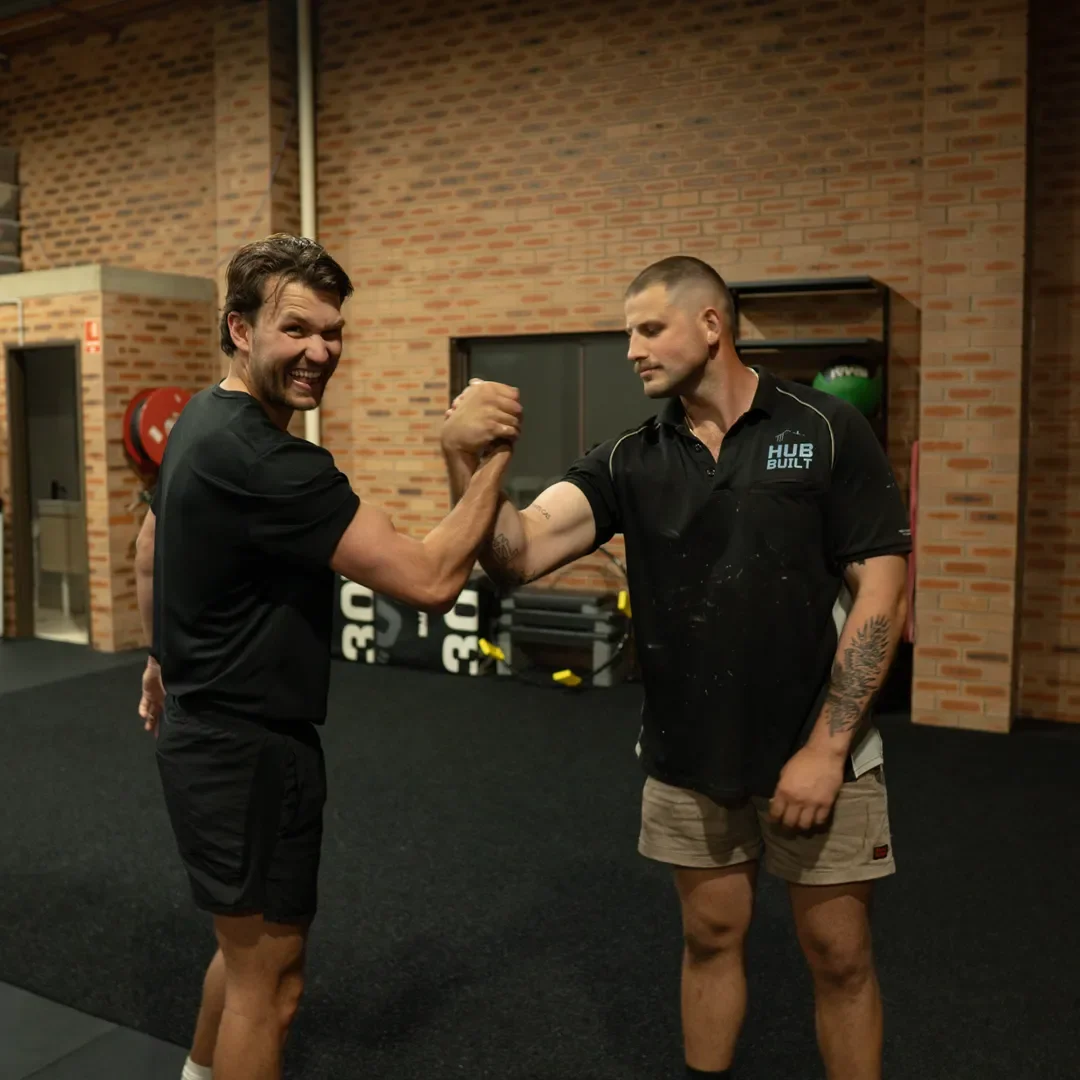
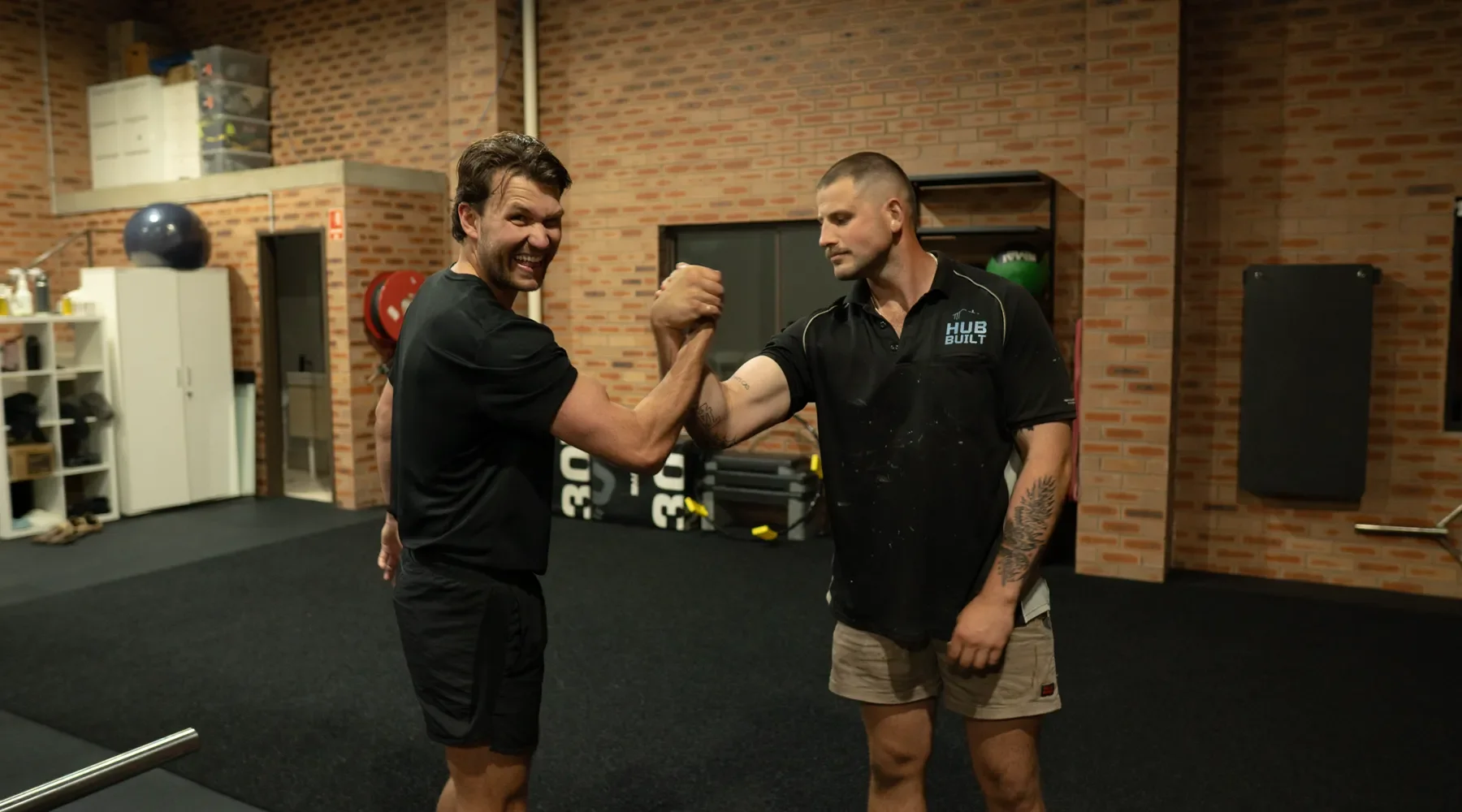
Alex and Joel at an SPC session working hard.
Start Strength and Conditioning at Evolve in Caringbah
Strength and conditioning at Evolve starts with an assessment, followed by a program built around your goals and delivered in the format that suits you, whether that is one-on-one, small group or online. You will be coached by me or one of our coaches, and every program is reviewed and adjusted as you progress.
We are at Unit 3, 55 Willarong Road, Caringbah. Book your first assessment and we will work out the best starting point together. If you are training for a race, you can also see our run coaching, which is available Australia-wide.
Strength and Conditioning FAQ’s
What does a strength and conditioning coach do?
A strength and conditioning coach assesses how you move, builds a training program around your sport, race or goal, coaches you through the sessions and retests your progress at the end of each block. The aim is to make you stronger, more powerful, fitter and more resilient to injury.
What is the difference between a strength and conditioning coach and a personal trainer?
There is a lot of overlap between the two. Strength and conditioning starts with a performance goal, such as a race or a sport season, and plans training backwards from it, with regular testing to track progress. In Australia, S&C coaches are accredited through the Australian Strength and Conditioning Association (ASCA).
Do I need to be an athlete to see a strength and conditioning coach?
No. If you train with a goal in mind, whether that is a race, a sport season or staying strong as you get older, strength and conditioning is built for you. Most of the adults we coach at Evolve in Caringbah work full time and train around busy lives.
How often should adults do strength and conditioning?
Most adults do well with two to three sessions a week, but the right number depends on your other training, your recovery and your schedule. A runner training five days a week needs a different dose to someone who plays sport once a week, so a coach should set frequency around your situation rather than a fixed rule.
Is strength and conditioning safe for people over 40?
Yes, when it is properly assessed and progressed. Strength and power training becomes more valuable with age, because muscle and power decline faster when they are not trained. A good program starts from your current capacity and builds gradually from there.
How much does strength and conditioning cost in the Sutherland Shire?
Cost depends on the format you choose. One-on-one coaching costs more per session than small group training, and online programming sits at a different price point again. Contact Evolve in Caringbah and we can talk through which option suits your goals and budget.
Where can I find a strength and conditioning coach in Caringbah?
Evolve Human Performance is at Unit 3, 55 Willarong Road, Caringbah, and coaches athletes from across the Sutherland Shire, including Miranda, Cronulla and Kirrawee. We offer one-on-one, small group and online strength and conditioning, and every new client starts with an assessment.