Sydney Marathon Training Guide: How to Prepare for the Hilliest Major
Training for the Sydney Marathon takes roughly 43 weeks if you start when ballot results land on 3 November 2026, split into base, build, race-specific and taper phases. The course looks friendly on paper with a net downhill profile, but its climbs and descents punish runners who only train on the flat. The answer is a strength-led plan that builds capacity in your legs, then puts it to work on real hills.
| Key race facts | TCS Sydney Marathon 2027 |
|---|---|
| Date | Sunday 29 August 2027 |
| Distance | 42.195km |
| Start | Miller Street, North Sydney |
| Finish | Sydney Opera House |
| Start times | 6:15am elite wheelchair, 6:30am mass participation (subject to final confirmation) |
| Cut-off | 7 hours |
| Elevation | 313m of gain, 83m net drop (roughly 396m of descent) |
| Ballot window | 10am AEST 29 September to 10am AEDT 19 October 2026 |
| Ballot results | 3 November 2026 |
| Source | tcssydneymarathon.com, last checked 29 September 2026 |
Why the Sydney Marathon course is harder than it looks
Sydney has more climbing than any other World Marathon Major, and it sits in the worst possible places: early, when fresh legs tempt you to push, and late, when your quads are already worn down from the descents. According to the official race website, the course carries 313m of elevation gain against a net drop of 83m, which adds up to close to 400m of downhill running across 42.2km.
Here is how the 2026 course played out, section by section.
The opening descent. The start on Miller Street in North Sydney is the highest point of the course, and the road falls away steeply in the first kilometre. It feels free, which is exactly the problem, because the quad damage you do here gets paid back in the final hour.
The Sydney Harbour Bridge. Within the first few kilometres you climb onto the bridge. Adrenaline hides the effort, so this is where plenty of runners spend energy they will want later.
The city section. Through The Rocks and the CBD the road rises and falls in short pieces that break your rhythm without ever looking like a real hill.
Oxford Street. A long, steady climb rather than a steep one. It rewards runners who have trained sustained climbs and exposes those who have only done short hill repeats.
Centennial Park and Moore Park. Constant small changes in gradient through the eastern suburbs. Nothing dramatic on its own, but it keeps loading your legs at a point where fatigue is starting to build.
The late climb. On the way back past Mrs Macquarie's Chair, the course throws in its last meaningful climb with tired legs, and this is where under-prepared runners start walking.
The downhill finish. The final stretch runs down to the Sydney Opera House forecourt. It is the best finish in the Majors, and the last test for whatever your quads have left.
Sources disagree on exactly where each climb falls, so check the official 2027 course map on tcssydneymarathon.com once it is released. The pattern will not change much: a fast downhill start, climbs in the city and the east, and a hard final 10km.
How long do you need to train for the Sydney Marathon?
If you start the week ballot results land, you have roughly 43 weeks until race day. For a runner who already runs consistently, that is a generous runway, and it is long enough to build strength and hill capacity properly rather than cramming them into the final two months. If you are coming off a break or starting from a low base, you will use more of that time building consistency before the marathon-specific work begins.
Here is the phase calendar we use with our own Sydney Marathon runners. Treat the timing as a guide and adjust it to your history, your current fitness and how your body responds to load.
| When | Phase | Training focus | Key dates |
|---|---|---|---|
| Nov to Dec 2026 | Base | Consistent easy running, start or restart strength training, build the weekly habit | 3 Nov: ballot results |
| Jan to Mar 2027 | Base | Grow aerobic volume gradually, run early to manage summer heat, add rolling routes and short controlled hills | |
| Apr to May 2027 | Build | Longer long runs, regular hill sessions including controlled downhills, strength still progressing | 2 May: Sydney Half Marathon |
| Jun to Jul 2027 | Race-specific | Long runs on hilly routes with climbs late in the run, fuel practice, some long runs at 6:30am | |
| Aug 2027 | Taper | Running volume comes down, strength stays twice a week at lower volume, small doses of intensity | 29 Aug: race day |
Base (November to March). This is where the engine gets built. Aerobic volume goes up gradually, most of it easy, and strength training does the heavy lifting on your legs while running load is still modest. This is the time to push hardest in the gym, with up to three strength sessions a week depending on your history and what else is in your week. Summer heat is the main obstacle, so run early and let pace drift on hot days rather than forcing it.
Build (April to May). Long runs extend, and hills become a regular part of the week, including controlled downhill running. The HOKA Runaway Sydney Half Marathon on 2 May 2027 makes a useful tune-up. It shares some of the same roads, including the Harbour Bridge, and gives you a race-effort check about 17 weeks out. If you are stepping up from the half, our post on moving from half marathon to marathon training covers what changes.
Race-specific (June to July). This is where the training starts to look like the course. Long runs move onto hilly routes, climbs get placed in the back half of the run, and fuelling gets rehearsed. Some long runs should start at 6:30am so race morning holds no surprises.
Taper (August). Running volume comes down over the final few weeks. Strength stays in twice a week with the weights still challenging but fewer sets, and a little intensity keeps your legs sharp without adding fatigue.
Got your bib? Book a free call and we will map your block from now to 29 August.
The strength and hill work most Sydney Marathon plans leave out
The most specific way to prepare for Sydney's hills is to run hills, and the downhills matter as much as the climbs. Strength work earns its place because it builds the capacity that lets you do more of that hill running without breaking down, which means it supports the specific work rather than replacing it.
Running downhill loads your quadriceps eccentrically, which means the muscle is lengthening under load as it brakes each stride. That type of loading causes more muscle damage than anything else in running, and on a course with close to 400m of descent it adds up to thousands of braking contractions before you reach the late climbs. The climbs shift more of the work onto your calves and Achilles tendons, which is why so many runners feel their lower legs tighten in the back half.
The good news is that legs adapt quickly to downhill running. A dose of eccentric work that leaves you sore the first time leaves you far less sore when you repeat it a week or two later, because the muscle remodels to handle it. That adaptation is specific to the task, so you only get it by running downhill. A runner who does all their running on the flat and all their strength work in the gym will arrive fitter than one who does neither, but they will still meet those descents underprepared.
The catch is that hill running, and downhill running in particular, is aggressive on the body. You cannot pile it on from the first week without paying for it in soreness and niggles. This is where strength training does its job. It builds the chassis, meaning the tissue capacity in your quads, calves and Achilles, so you can tolerate more of the hill running that will actually prepare you for Sydney.
"Strength work builds the capacity and the foundation, but you still have to put it into the thing you want to get better at, which is running hills. Hills are hard on the body, and strength training is what lets you do more of the running that prepares you for Sydney."
Riley Kilham, Run Coach, Evolve Human Performance
In practice, the gym work follows the same calendar as your running. The early months are where you build, because running load is still modest and you have the recoverable energy to go hard in the gym. As race day approaches and running becomes the priority, the goal shifts to maintaining what you built, and that shift is where plenty of runners get it wrong.
| When | Phase | Strength focus | Sessions per week |
|---|---|---|---|
| Nov to Dec 2026 | Base | General foundational strength, jumps and plyometrics. Use the recoverable energy you have while running load is low to work hard in the gym | Up to 3 |
| Jan to Mar 2027 | Base | More specific work on priority areas and weak points: quads, calves, Achilles and lateral hip | Up to 3 |
| Apr to May 2027 | Build | Start peaking key qualities. Volume drops slightly and intensity rises, with lifts that are challenging but not carrying overwhelming fatigue | 2 |
| Jun to Jul 2027 | Race-specific | Running becomes the priority from 8 to 10 weeks out. Maintain strength and capacity with heavy lifts at lower volume, and manage niggles as they come up | 2 |
| Aug 2027 | Taper | Keep load going through the legs as running tapers, with enough stimulus to hold strength and capacity without adding fatigue | 2 |
Maintaining does not mean letting off the gas. From around 8 to 10 weeks out the weights stay heavy and challenging and the intensity stays high, and what comes down is volume. A lift you did for 4 sets of 6 in autumn might become 2 sets of 4 in July, which is enough to hold the strength and capacity you built without the fatigue that would eat into your running. This is also the phase to get more specific about how your body is feeling, prioritising any niggles or sore spots that flare up as the running load peaks.
Strength stays in twice a week right through the taper. As running volume drops away, keeping some heavy load going through the legs keeps them switched on and turning over, while the lower volume gives your body room to absorb the taper and arrive fresh on race morning.
I will not repeat exercise lists here. For the specifics, start with the top 5 strength exercises for runners and triathletes, then read how much runners should strength train per week to work out where it fits around your running.
Training in the Sutherland Shire? Our in-person strength and conditioning for marathon runners runs out of our Caringbah gym.
Training for the Sydney hills from the Sutherland Shire
You do not need to drive into the city to prepare for this course. The Sutherland Shire has climbs, descents and rolling loops that match each section of the Sydney course, and these are the routes we use with our own marathon runners out of Caringbah. Full distances, elevation and access details are in our guide to the 13 best running routes in the Sutherland Shire.
Burraneer Hill loop: the opening descent
The back streets of Burraneer have some of the punchiest gradients in the Shire. Use them to practise controlled downhill running, the skill that protects your quads in the first kilometre from North Sydney, and to build the eccentric capacity that carries you through the rest of the race.
Kareela, Jannali and Oyster Bay: the Bridge and Oxford Street
This loop drops down toward the water and climbs back out, giving you longer climbs at a steadier gradient. That is the closest local match to the Harbour Bridge and the long drag up to Oxford Street, and it is ideal for practising an even effort on a sustained rise.
Engadine to Yarrawarrah: long sustained climbs
The southern end of the Shire gives you long, steady climbs for bigger hill repeats or aerobic running with plenty of elevation. Placed late in a long run during the race-specific phase, it rehearses the feeling of climbing on tired legs.
Lady Carrington Drive, Royal National Park: the rolling middle
Wide, gently undulating and mostly unsealed, Lady Carrington Drive suits long runs that need constant small changes in gradient without the pounding of steep road descents. It is a good stand-in for Centennial Park and Moore Park, and the softer surface is kind to your legs during high-volume weeks.
For flat, measured pace work, Sylvania Waters Athletics Track and the easy running around Cronulla balance out the hill sessions. Not every run should be hilly, and the flat days are where recovery and easy volume happen.
Pacing an undulating course: run by effort, not by the watch
On a course like Sydney, even splits are the wrong target. Hold an even effort instead, let your pace slow on the climbs and quicken on the descents, and you will reach the final 10km with far more left than the runner chasing the same number every kilometre.
The climbs are where most runners overcook it. Pushing to hold goal pace up the bridge or Oxford Street costs far more than the handful of seconds it saves, because you pay for it with a rising heart rate and heavier legs later. Shorten your stride, keep your cadence up and accept that the watch will show a slower split.
The descents are the opposite trap. The opening kilometre tempts everyone to bank time, but hammering downhill on fresh legs is exactly how you load up your quads for a painful final hour. Run descents relaxed and controlled, with quick, light steps, and let gravity give you free speed rather than forcing it.
Practise this in training. Long runs on hilly routes teach you what an even effort feels like when the terrain keeps changing, and most of that running should sit at an easy aerobic effort. Our post on Zone 2 training for runners explains what that looks like, and Is Your Long Run Doing More Damage Than Good? covers how to structure the long run itself.
Training through a Sydney winter for a late-August race
The late-August date means your most important training happens through a Sydney winter. That is mostly an advantage, since cool mornings make long runs far more comfortable than the summer base months, but it brings its own challenges.
The race starts at 6:30am, so rehearse it. Run some of your longest runs at race start time in the final two months to learn what to eat, when to wake up and how your body feels running in the cold before sunrise. Those dark, cold mornings in the Shire are as close as you will get to race morning without being on Miller Street.
Dress in layers you can remove, and treat gloves and an old long-sleeve top as throwaway kit on race morning. Keep the warm-up short and gentle, a few minutes of easy jogging and some drills, because the opening descent warms your legs quickly and you do not want to burn energy before the start.
Race day itself can go either way. Late August sits at a point in the Sydney year where the morning can be freezing or unseasonably warm, and in recent years the course has started to heat up from as early as 8 or 9am once runners are out in the direct sun. We have been on course spectating the Sydney Marathon for the past four years, and it has been warm every time.
Heat is a quality you can train for, but it is a luxury rather than a priority. If you are already undercooked and pushing your body to its limit just to get through the training, adding heat work on top is probably not suitable for you. If you have the time and want to leave nothing to chance, some heat exposure in the final block could be what saves you on a warm day.
The challenge is that the bulk of your training happens in winter, when heat is hard to come by. Saunas, hot baths and the occasional training session run in extra layers are simple ways to start exposing your body to warmer conditions. It is not the first thing most runners should add, but once the running and strength work are in place, it is a sensible way to cover one more variable.
Fuelling around the climbs
Fuel before the climbs, not on them. It is easier to take a gel or a drink on flat or gently downhill road, and it gives the carbohydrate time to reach your bloodstream by the time you need it on the next rise.
The late climbs matter most. By the final 10km your stores are low and your legs are tired, so the fuel you take in the kilometres before those climbs is what carries you over them. Leave it until you are already on the hill and it arrives after you needed it.
Plan where you will fuel using the official course map and aid station list, then practise that exact pattern in your long runs from the build phase onward. Your gut adapts to fuelling on the run through repetition, in much the same way your legs adapt to hills, so whatever you plan to use on race day should be tested in training first.
Running Sydney as your first marathon
Sydney can be a great first marathon, and the seven-hour cut-off takes a lot of pressure off. That works out to just under 10 minutes per kilometre, which leaves room for a run-walk approach on the climbs if that is what gets you home.
The mistakes first-timers make here come down to respecting the course. They go out too fast on the opening descent, add weekly volume faster than their body can handle, and do all their long runs on flat paths. Three of our athletes ran Sydney as their first marathon in 2026 and all three finished, off builds that prioritised consistency over big weeks.
If you are stepping up from 21.1km, our guide to what changes in training from the half to the full marathon covers the jump in detail. If you are weighing up whether to have someone guide you through it, here is what an online run coach actually does.
Five mistakes that cost runners on the Sydney course
1. Banking time on the early descent. The first kilometre drops steeply from North Sydney, and every second you gain there comes back with interest in the last 10km.
2. Letting strength slide in the final 8 weeks. Strength work should drop in volume as race day approaches, not disappear or turn light, because heavy lifting at low volume is what holds on to the capacity you built.
3. Never training downhill. Downhill running builds an adaptation you cannot get any other way, and skipping it leaves your quads exposed on a course with close to 400m of descent.
4. Doing every long run on flat routes. Flat long runs build the engine but teach you nothing about holding effort through constant rises and falls.
5. Skipping fuel before the late climbs. Fuel taken on the hill arrives too late, so take it in the kilometres before the final climbs.
Results from Evolve runners
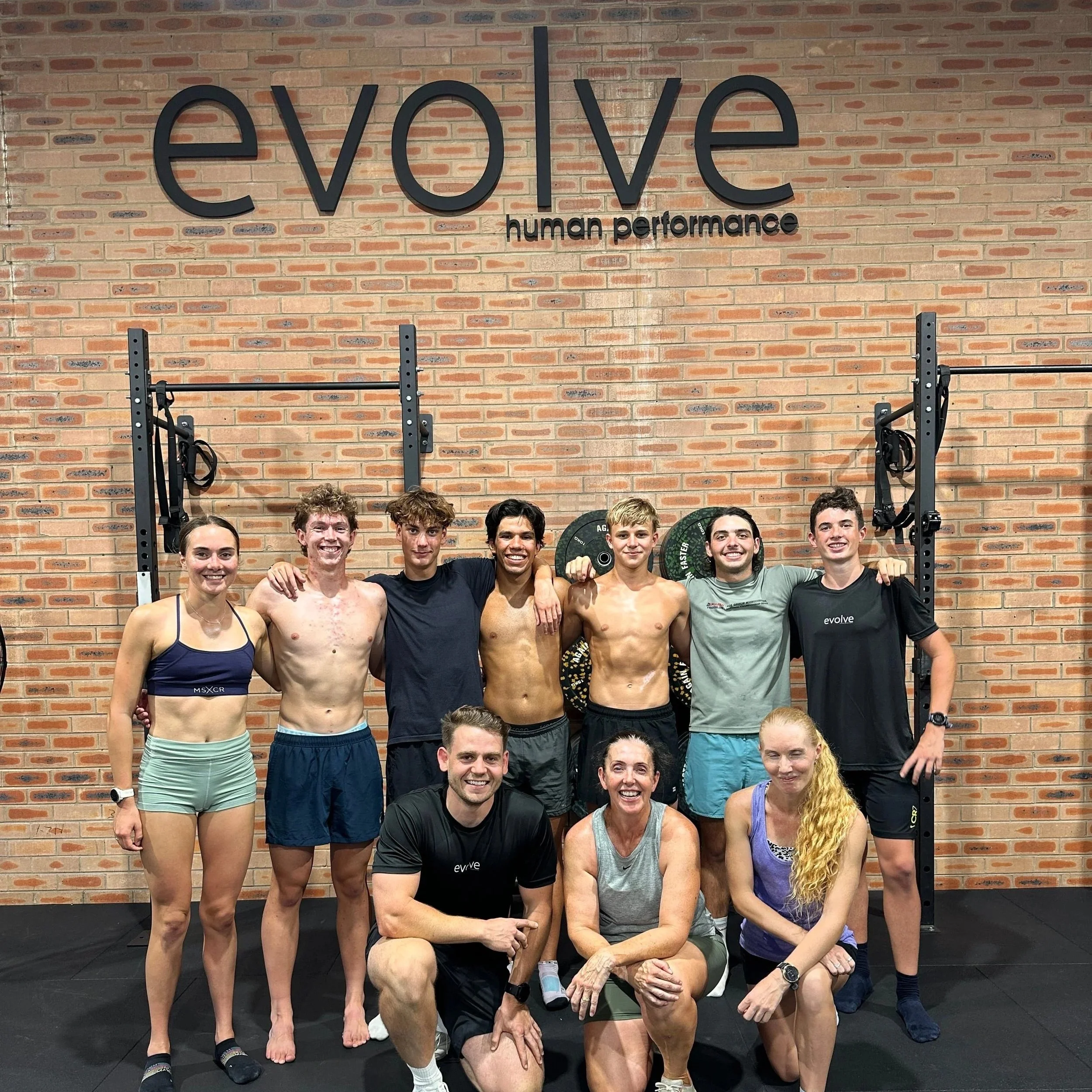
Twelve Evolve athletes ran the TCS Sydney Marathon on 30 August 2026, and all twelve crossed the finish line at the Opera House. Rhiannon Moffat, Dominic Patruno and Jen Mallis ran their first marathon. Luke Dalla-Bona, Nathan Oates, Josh Cullen, Brendan Fenwick and Dominique Pervan all set new personal bests, with Luke going under three hours in 2:59:08.
The squad trained through the Sutherland Shire winter with strength work built into their programs, and much of their hill preparation happened on the routes above. You can read the full story in our Sydney Marathon 2026 recap.
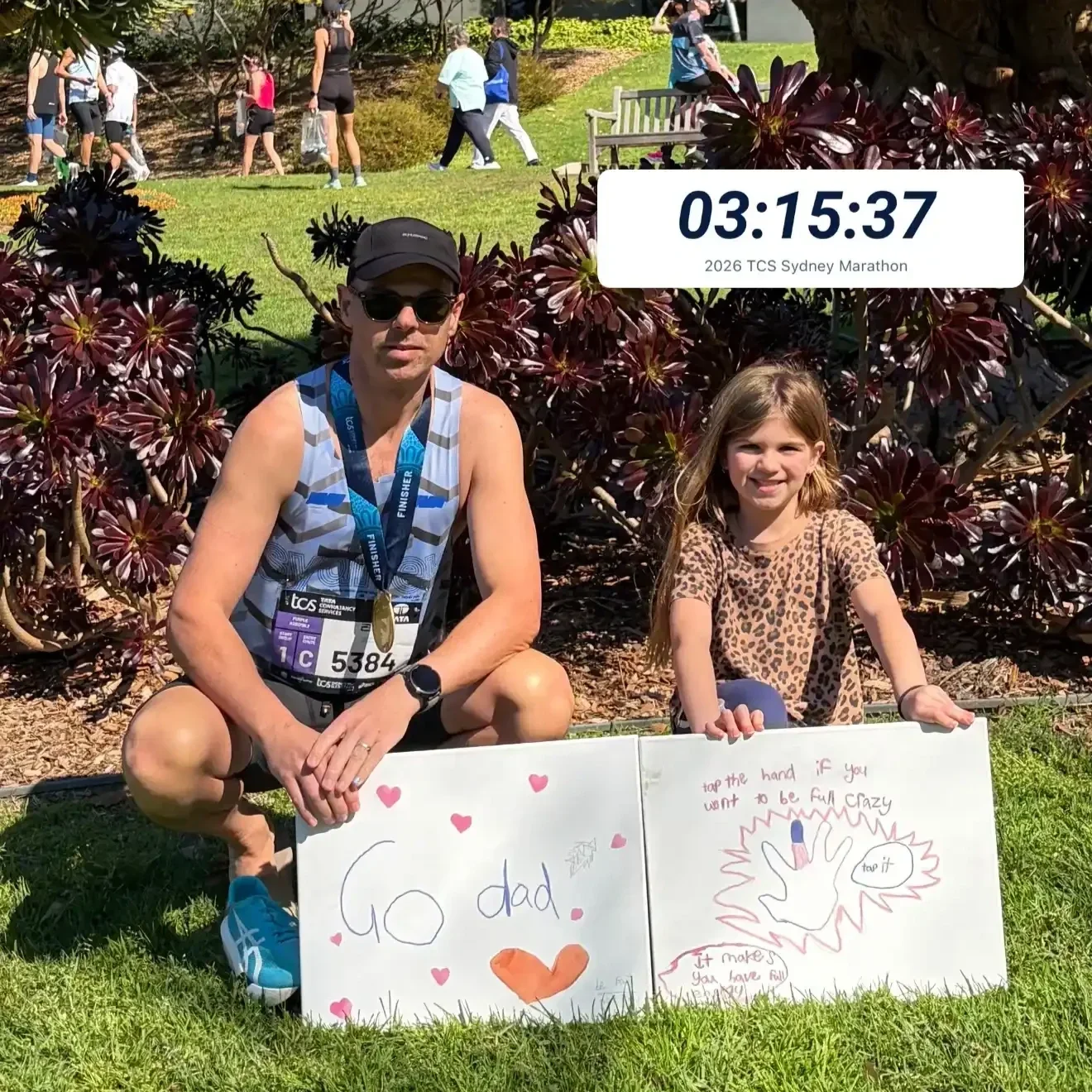
Brendan Fenwick with a massive PB of 3:15 at the Sydney Marathon 2026
How Evolve coaches Sydney Marathon runners
We coach Sydney Marathon runners in two ways. Our online run coaching works anywhere in Australia, with personalised programming built around your week, 24/7 support and monthly check-ins. If you are local, you can combine run coaching with in-person strength and conditioning at our gym in Caringbah, in the Sutherland Shire.
Either way, the program is built around the calendar above and adjusted to you: your running history, your injury history and the time you actually have. Run coaching comes with a 30-day money-back guarantee, and you can meet our coaching team to see who you would be working with.
Start your Sydney Marathon block. Use the phase calendar above as your starting point, and we will build it around you.
Frequently Asked Questions
How many weeks do I need to train for the Sydney Marathon?
If you get your ballot result on 3 November 2026, you have about 43 weeks until race day on 29 August 2027. That is enough time to build a base, add hills and strength, and complete a focused race-specific block. How much of it you need depends on your running history and current fitness.
Is the Sydney Marathon hilly?
Yes. Sydney is the hilliest of the World Marathon Majors, with 313m of elevation gain according to the official race website. The course is net downhill, dropping 83m from North Sydney to the Opera House, but the climbs across the Harbour Bridge, through the city and late in the race make it far harder than that figure suggests.
Is Sydney a good first marathon?
It can be, provided you prepare for the hills. The seven-hour cut-off gives first-timers plenty of room, and the crowds and the finish at the Sydney Opera House are hard to beat. The trade-off is a course that punishes poor pacing, so train on hilly routes and practise running by effort rather than pace.
Should I strength train during marathon training?
Yes. Strength training builds the capacity in your quads, calves and Achilles tendons that lets you handle more hill running and more weekly volume without breaking down. Build it early in the block, then keep lifting heavy at lower volume through the taper. At Evolve we coach this in person at our Caringbah gym in the Sutherland Shire and online.
How many long runs should I do before the Sydney Marathon?
There is no single right number, because it depends on your history and how your body handles the load. What matters more is a gradual build of long runs through autumn and winter, with several of the longest on hilly routes and a few starting close to the 6:30am race start time.
What is the Sydney Marathon cut-off time?
The official cut-off for the TCS Sydney Marathon is seven hours. Mass participation starts at 6:30am, with elite wheelchair athletes starting at 6:15am. Seven hours works out to just under 10 minutes per kilometre, which leaves room for a run-walk approach if you need it. Check the official website closer to race day for final timings.
When will I find out if I got a Sydney Marathon ballot place?
The 2027 ballot runs from 10am AEST on 29 September to 10am AEDT on 19 October 2026. Successful applicants are notified and charged on 3 November 2026. Entering the ballot is free and places are drawn at random, so there is no advantage in applying on the first day.