The Top 5 Strength Exercises for Runners and Triathletes
Most runners and triathletes who come to us have one thing in common. They have been training consistently, they have put the kilometers in, and they still keep getting hurt. Or they plateau. Or both.
The missing piece is almost always the same thing. They are not doing enough in the gym, and when they are, they are not doing the right things.
This is not a list of generic gym exercises dressed up with a running angle. These are the five movement patterns that we think every endurance athlete should have in their program all year round, from someone training for their first 5k to athletes preparing for Ironman. The rationale behind each one matters as much as the exercise itself, so we have covered both.
Why Strength Training Matters for Runners and Triathletes
Running and triathlon are high-repetition sports. Every stride you take is a single-leg loading event. Over the course of a marathon, that is roughly 40,000 foot strikes. Your tendons, calves, quads, hamstrings and glutes are absorbing and generating force on repeat, for hours at a time.
The athletes who handle that load well are not just the ones with good aerobic fitness. They are the ones whose tissues are strong enough, resilient enough and elastic enough to tolerate the demand without breaking down. That resilience comes from progressive strength training, not from running more.
With that context, here are the five exercises that build the foundation.
Exercise 1: An Upright Squat
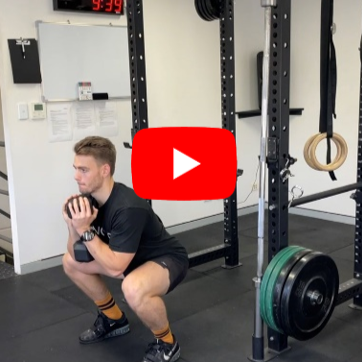
Goblet squat, front squat, Zercher squat. The specific variation matters less than the pattern. What we are looking for is a knee-dominant squat where you can get into a deep, upright position and take the quads, knees and ankles through a large range of motion under load.
This is one of the most important patterns for runners because the quads are primary contributors to running economy and knee stability. Weak quads are a common factor in knee pain, IT band issues and poor running mechanics. Squatting in an upright position builds strength and capacity through the exact range of motion that running demands.
Pro tip: If you struggle to stay upright in a squat due to ankle mobility, elevate your heels slightly using a small plate or heel wedge. A front-loaded variation like a goblet squat will also make it easier to keep your torso tall. Prioritise position over load, especially early on.
Exercise 2: A Hinge Movement
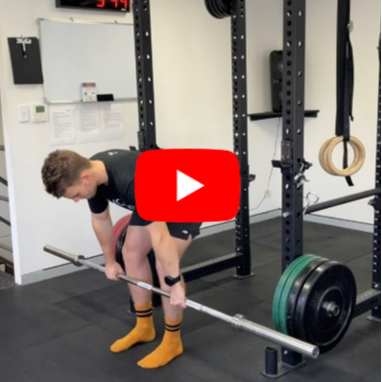
Barbell RDL, trap bar deadlift, barbell deadlift. The hinge pattern is the single most effective movement for building strength through the hamstrings and glutes, which are the primary drivers of running propulsion.
Hamstring injuries are one of the most common and most debilitating injuries in running and triathlon. A well-progressed hinge program builds the tensile strength and tissue capacity in the hamstrings that makes them genuinely resilient, not just functional. There is also a secondary benefit around hamstring length over time, which matters for running mechanics and stride length.
Pro tip: If you are new to hinging, start with the RDL before progressing to trap bar and then barbell deadlift. The RDL teaches you to feel the load in your hamstrings rather than your lower back, which is the most common error people make when they first start deadlifting. Take your time learning the pattern before adding significant load.
Exercise 3: A Calf and Heel Raise
Standing calf raise, seated calf raise, single leg variations. The calf raise is probably the most underrated exercise in endurance sport, and also the most poorly executed. Most people do them with bodyweight, through a limited range of motion, and call it done. That is not enough.
Your calves and Achilles tendon are doing an enormous amount of work with every foot strike. The Achilles is one of the most commonly injured structures in runners, and the majority of those injuries are underpinned by inadequate calf strength and tendon capacity. A properly loaded calf raise, taken through a full range of motion with external load, is one of the most direct things you can do to bulletproof that structure.
Pro tip: The most common technique error we see is the foot rolling outward at the top of the movement. Focus on pushing through the base of your big toe as you rise. Bodyweight is an insufficient stimulus for most people after a few weeks, so progress to a loaded variation using a dumbbell or barbell. The stimulus needs to be challenging to drive adaptation.
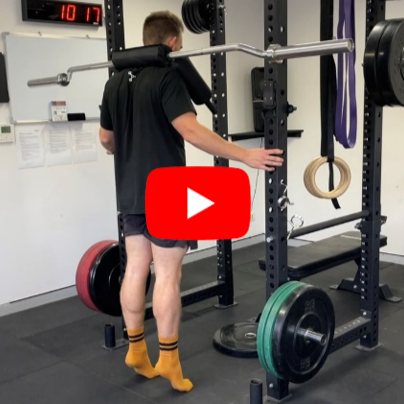
Exercise 4: A Rotational Core Movement
Wood chops, band rotations, medicine ball throws. When most people think of core training for runners, they think planks and sit-ups. Those have their place, but they are training the core in a static or sagittal plane, which is not how you actually run or swim or move dynamically through sport.
Running involves rotation. Your thoracic spine should be rotating with every stride to counterbalance the movement of your legs. When that rotation is restricted or the muscles responsible for it are weak, you compensate. Usually through your lower back, your hips, or your shoulders. Rotational core training builds the capacity for the spine to move through rotation dynamically, under control, with load.
Pro tip: Focus on getting rotation through your mid back rather than just twisting your arms. The goal is thoracic rotation. Position takes priority over load with these movements, and there is usually a quality of relaxation into the movement at end range before returning under control. Experiment with different directions and ranges to build capacity across multiple positions.
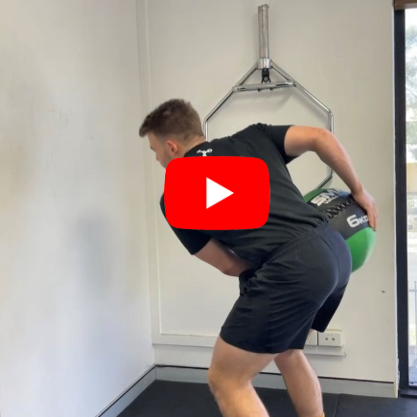
Exercise 5: Plyometrics and Jump Variations
Pogos, squat jumps, lateral jumps, landings. This is the one most runners are nervous about, and understandably so. Jumping feels risky when you are already carrying a lot of running volume. But done conservatively and progressively, plyometric training is one of the highest value things an endurance athlete can do.
Running is fundamentally a plyometric activity. You are storing and releasing elastic energy through your tendons with every stride. Training that quality directly, through jump variations and pogos, improves the elastic stiffness of your tendons and makes that energy transfer more efficient. The result is better running economy, which means you run at the same pace with less energy output. It also builds the structural robustness of your tendons and connective tissues in a way that heavy strength training alone cannot fully replicate.
Pro tip: Introduce plyometrics conservatively and keep the volume low, especially when you are also carrying significant running load. A few sets of pogos or squat jumps at the end of a strength session is enough to start. Have some fun with it. Experiment with directions, surfaces and different jump patterns. Building capacity in multiple positions is more useful than repeating the same jump in the same direction every session.
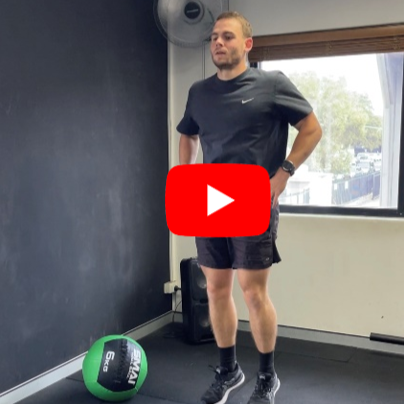
How to Put This Together
These five patterns do not need to be done in one session. A practical approach for most runners and triathletes is two strength sessions per week, each covering two or three of these patterns at a moderate to high load. You do not need to be in the gym for two hours. A focused 45 to 60 minute session covering a squat, a hinge, a calf raise variation and some plyometrics at the end is enough to drive meaningful adaptation.
What matters most is that the sessions are progressive. Adding load over time, adding range of motion, or adding complexity to the movements. Tissues adapt to the stimulus you give them. If the stimulus never changes, the adaptation plateaus.
The other thing that matters is timing relative to your key running sessions. Do your strength work on days that are not immediately before your hardest run of the week. Your hardest running sessions should happen when you are fresh enough to execute them well, not on legs that are still recovering from heavy squats the day before.
Want this built into your program properly?
These five exercises are a starting point, not a complete program. How you progress them, how you sequence them within your training week, and how you balance them against your running and race schedule all require some individual thought. That is exactly what we do with athletes on our strength and conditioning program and our online run coaching program. If you want a program that actually accounts for all of it, get in touch here.